1. What is blue carbon and why is it important to conserve it?
Blue carbon (Blue Carbon) refers to the carbon captured and stored by vegetated coastal and marine ecosystems, mainly mangroves, seagrass meadows and salt marshes.
These ecosystems play a fundamental role in regulating the climate, as they absorb carbon dioxide (CO₂) through photosynthesis and can store significant amounts of carbon in their vegetation and, especially, in their sediments for long periods.
In addition to their climatic importance, these environments provide essential habitats for numerous species, contribute to maintaining marine biodiversity, promote biological productivity, and participate in fundamental ecological processes for the functioning of the oceans (Macreadie et al., 2021).
The conservation of these ecosystems depends not only on protecting their vegetation and physical characteristics. It is also important to maintain the biological interactions that contribute to their functioning, including the relationships between predators, prey, and herbivores.
In this context, the conservation of large marine predators, particularly sharks, becomes relevant as part of a comprehensive strategy for protecting biodiversity and the functionality of ecosystems.
2. Sharks and their role in marine food webs
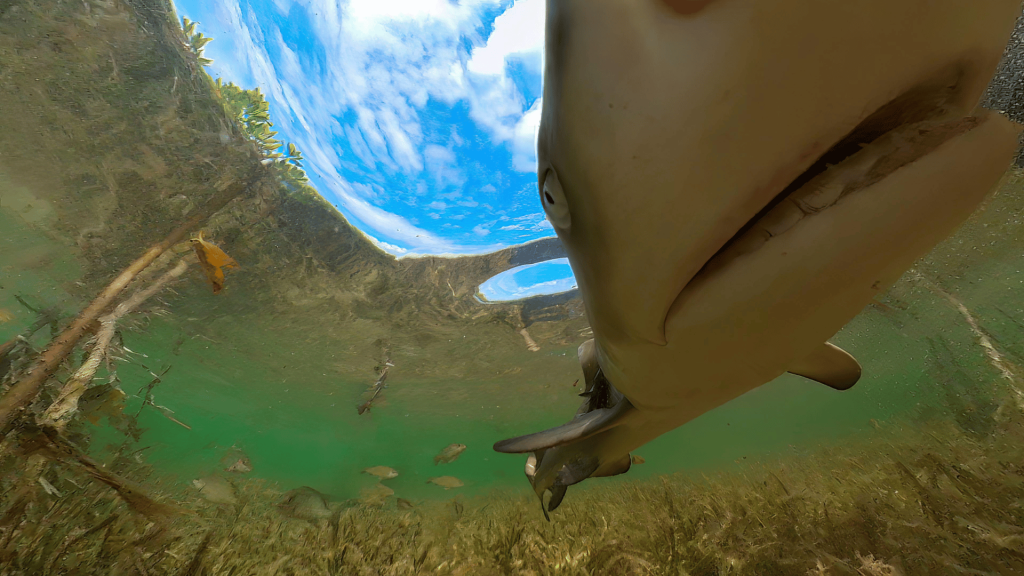
Sharks occupy different positions within marine food webs. Some species act as apex predators, while others occupy intermediate positions, depending on their biological characteristics, feeding habits, and the ecosystems they inhabit.
As predators, they can influence the abundance, distribution, and behavior of their prey, generating effects that are transmitted to other levels of the food web.
These interactions are involved in regulating the relationships between different organisms and can influence the flow of energy through marine ecosystems.
One of the ecological mechanisms associated with large predators is the trophic cascades, processes by which changes in the abundance or behavior of predators can generate indirect effects on organisms at lower trophic levels.
For example, the presence of a predator can modify the behavior, distribution, and feeding patterns of its prey, generating changes in the pressure they exert on other organisms and habitats.
In this way, certain shark species can contribute to maintaining ecological interactions that favor the functionality and resilience of some marine ecosystems (Dedman et al., 2024).
It is important to recognize that these functions vary between species and ecosystems. Not all sharks are apex predators, nor do they necessarily generate large-scale trophic effects.
3. Sharks as indicators of ecological integrity
In addition to their role as predators, sharks can provide relevant information about the ecological conditions of marine environments.
The presence of healthy populations of certain species can be a complementary indicator of ecosystem integrity, because these organisms depend on environmental conditions, resource availability, and habitat characteristics that allow them to maintain their populations.
Shark monitoring can provide information about:
- The diversity of predators present in an ecosystem.
- The relative abundance and temporal trends of their populations.
- The size structure and the presence of different developmental stages.
- The use of important habitats for their feeding, reproduction or growth.
- The availability of prey and the associated ecological conditions.
- Changes in the distribution and composition of shark communities.
The presence of sharks alone does not demonstrate that an ecosystem is healthy. However, their abundance, diversity, and population structure, analyzed alongside other environmental and biological indicators, can help assess ecological integrity and the functioning of food webs.
Therefore, shark conservation and monitoring represent complementary tools for understanding the ecological processes that maintain biodiversity and functionality of marine ecosystems (Dedman et al., 2024).
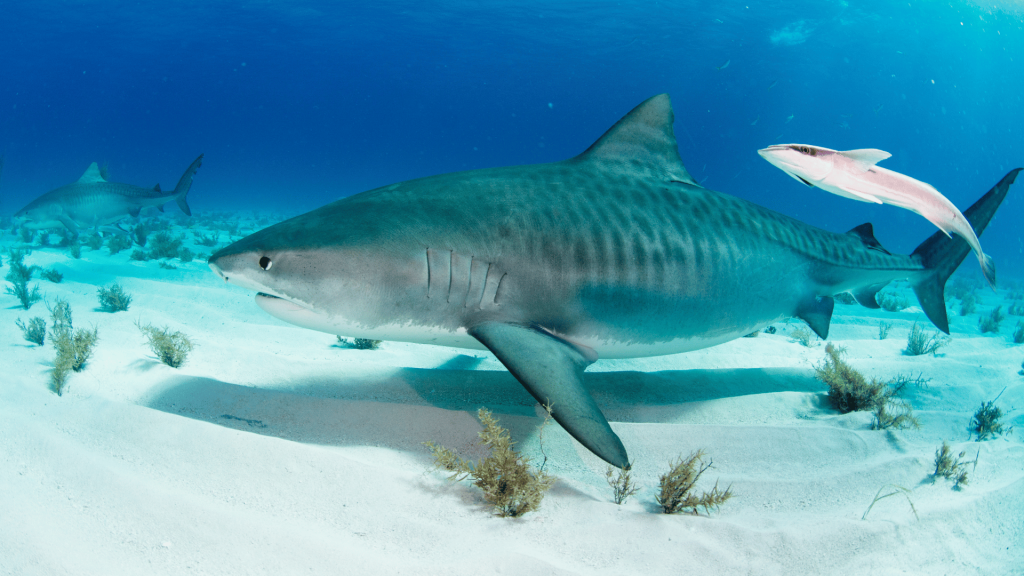
4. The role of the tiger shark in the conservation of seagrass meadows
One of the most relevant scientific examples of the relationship between large predators and blue carbon ecosystems is the role of the tiger shark (Galeocerdo cuvier) in seagrass meadows.
These ecosystems represent important natural carbon reservoirs. Their vegetation captures CO₂ through photosynthesis and contributes to its accumulation in marine sediments.
However, their structure and functionality are also influenced by interactions with herbivorous organisms, such as green turtles (Chelonia mydas).
Turtle grazing is a natural ecological process that plays a role in the dynamics of seagrass meadows. However, when grazing pressure is excessively concentrated in certain areas, it can reduce vegetation cover and alter habitat conditions.
Research conducted in Shark Bay, Australia, has documented how the presence of tiger sharks can modify the behavior and spatial distribution of green turtles.
Faced with the risk of predation, turtles can modify their feeding patterns and move between different grazing areas. This phenomenon, known as the predation risk effect, demonstrates that large predators can influence their prey not only through direct predation, but also through changes in their behavior (Heithaus et al., 2007).
Subsequently, experimental investigations in this ecosystem found results consistent with a behavior-mediated trophic cascade, in which the effects of predation risk influence the impacts of large herbivores on seagrass communities (Burkholder et al., 2013).
This mechanism demonstrates that predator-prey interactions can extend their effects to other components of the ecosystem, modifying the distribution of herbivory pressure and vegetation dynamics.
When these interactions favor the maintenance of seagrass cover and functionality, they can indirectly contribute to conserving ecosystems that play a fundamental role in storing blue carbon.
It is important to note that the intensity of these processes depends on the species present and the characteristics of each ecosystem. Therefore, the results documented in Shark Bay should not be automatically extrapolated to all seagrass meadows worldwide.
5. The relationship between large predators and the conservation of blue carbon
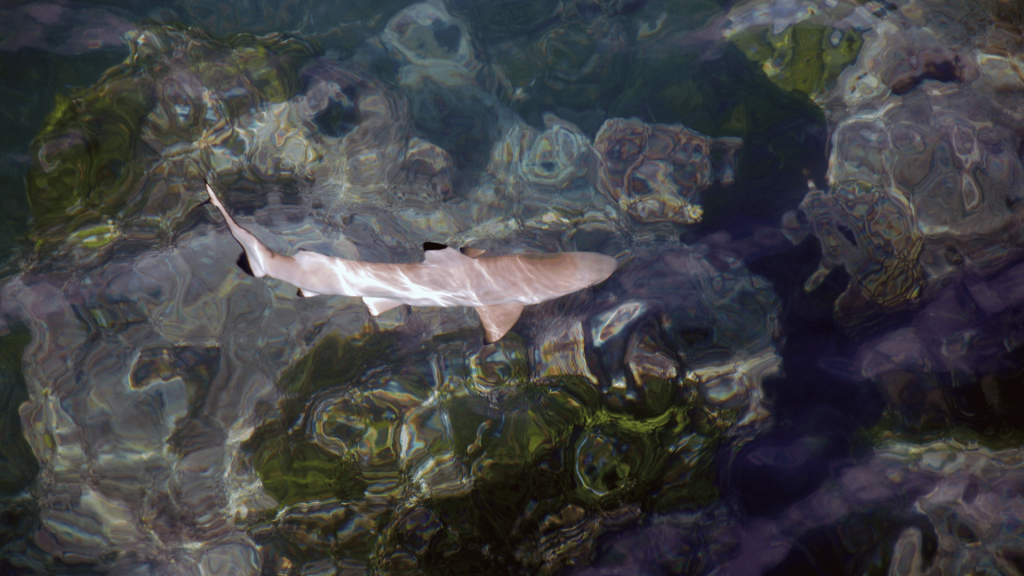
The relationship between sharks and blue carbon is not that these organisms directly capture or store carbon in the same way that mangroves and seagrass meadows do. Their importance lies mainly in the ecological functions they perform within food webs.
By regulating certain predator-prey interactions, some shark species can indirectly influence processes that affect the structure, distribution, and functionality of marine ecosystems.
This relationship can be explained by three main mechanisms:
- Regulation of trophic interactions.
Large predators can modify the abundance, distribution, and behavior of their prey, generating indirect effects on other organisms and habitats.
- Conservation of habitat structure and functionality.
Trophic cascades can influence herbivory pressure and the dynamics of plant communities, as occurs in certain seagrass meadows.
- Maintaining ecological integrity.
Preserving the interactions between predators, prey, and primary producers can promote the functioning of food webs and the resilience of certain marine ecosystems.
On the other hand, large marine organisms can also participate in carbon transport between different habitats through their movements, feeding, and natural decomposition processes. However, carbon transport does not necessarily imply its long-term storage (Dixon & Gallagher, 2023; Dedman et al., 2024).
Taken together, these mechanisms help us understand why shark conservation can be part of broader strategies for protecting biodiversity and the ecological processes associated with blue carbon ecosystems.
Although there are documented ecological mechanisms, the magnitude of sharks' contribution to carbon storage and their effects on organic carbon stocks still require further empirical research (Dixon & Gallagher, 2023).
6. Threats to sharks and their potential ecological consequences
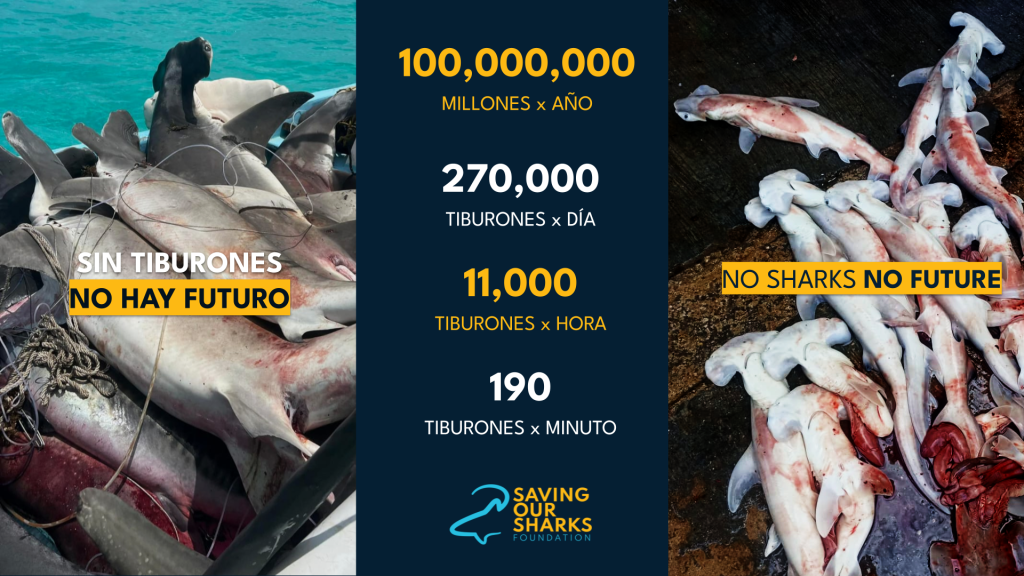
Overfishing, bycatch, habitat degradation, and other human activities pose major threats to shark populations worldwide.
The decline of certain species of large predators can modify the relationships between predators and prey, altering the structure of food webs and the ecological processes that take place in marine ecosystems.
When these alterations affect the interactions that regulate herbivory pressure, they can generate indirect consequences on habitats such as seagrass meadows.
The loss of vegetation cover in these ecosystems can compromise their ecological functions and reduce their ability to maintain important carbon reserves in their sediments.
However, the relationship between shark decline and blue carbon loss is neither universal nor automatic. It depends on the species involved, the characteristics of the ecosystem, and other environmental and anthropogenic factors.
For this reason, protecting shark populations should be considered part of a comprehensive strategy to conserve biodiversity, maintain ecological interactions and strengthen the resilience of marine ecosystems to environmental pressures (Dedman et al., 2024).
7. How does the Foundation contribute? Saving Our Sharks to the conservation of blue carbon ecosystems?
Saving Our Sharks Foundation develops conservation actions focused on the protection of sharks, scientific research, monitoring of their populations and the participation of local communities.
Conserving sharks means protecting the ecological interactions that maintain biodiversity and contribute to the integrity of our marine ecosystems, including those that play a vital role in the natural storage of blue carbon.
The Saving Our Sharks Foundation's contribution is related to the following mechanisms:
- Conservation of large marine predators.
Protecting sharks helps maintain populations of organisms that play important roles in marine food webs.
- Scientific research and monitoring.
Monitoring shark populations provides information on their abundance, distribution, population structure, and habitat use. This data can complement assessments of the ecological status of marine environments.
- Protection of ecological interactions.
Shark conservation helps maintain predator-prey relationships that can influence the structure and dynamics of food webs, including those interactions related to seagrass conservation.
- Participation of fishing communities.
Developing economic alternatives compatible with conservation, such as shark watching tourism, creates incentives to protect these organisms and promote a more sustainable relationship between coastal communities and marine resources.
- Environmental education and awareness.
Scientific outreach and environmental education activities make it possible to communicate the importance of sharks in marine ecosystems and strengthen the recognition of biodiversity as a fundamental component of ocean health.
Through these actions, Saving Our Sharks Foundation contributes to the conservation of biodiversity and ecological processes that can promote the integrity of ecosystems fundamental to the blue carbon cycle.
8. Our commitment to the oceans and the community
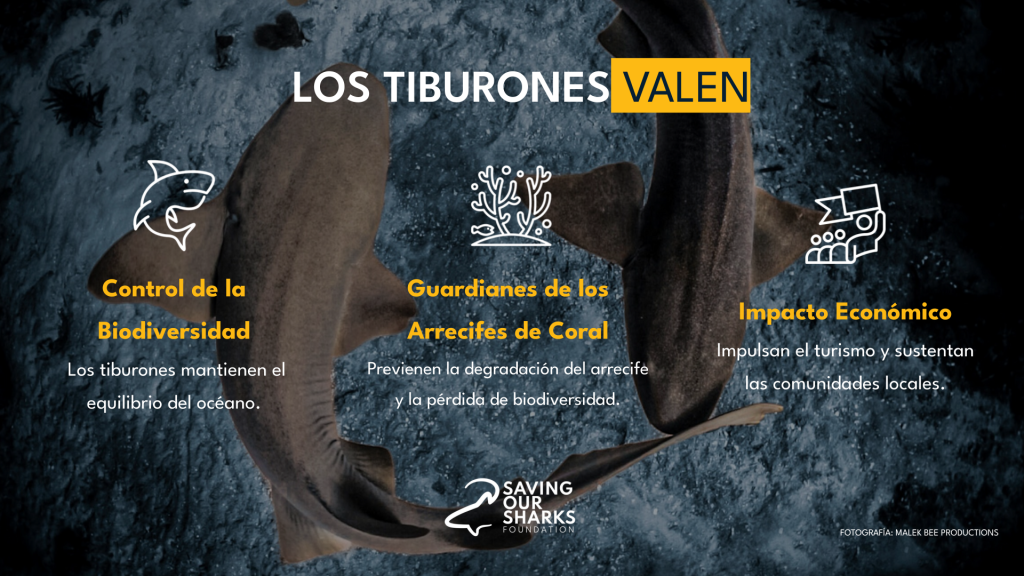
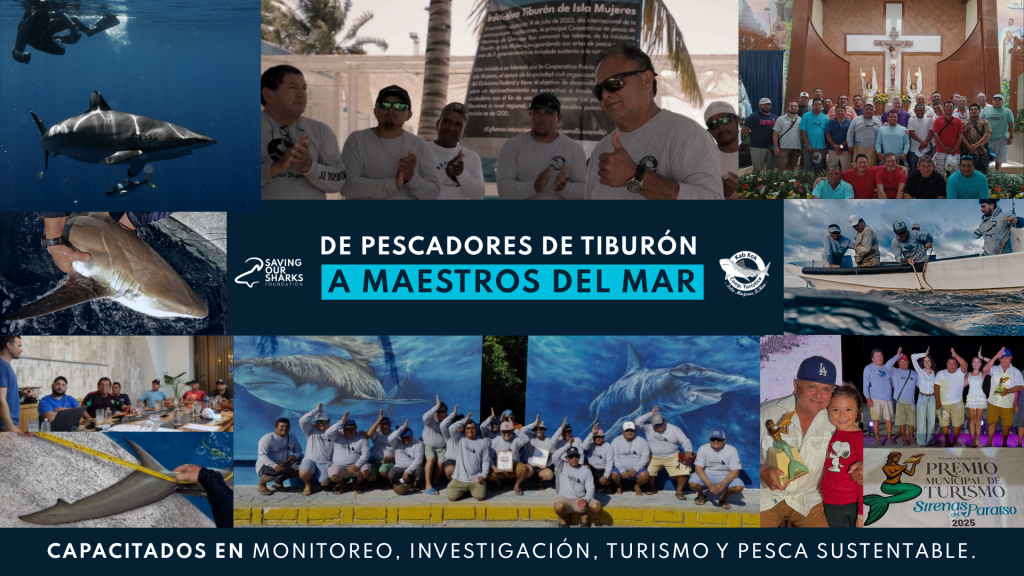
At Saving Our Sharks Foundation, our commitment to the oceans also involves working alongside fishing and local communities, recognizing their vital role in marine conservation. Our goal is to empower them through conservation initiatives, education, and sustainable economic alternatives that help reduce fishing pressure on sharks and combat overfishing, promoting a more balanced relationship between communities and marine resources.
We believe that protecting sharks and conserving marine ecosystems must go hand in hand with the well-being of communities that depend on the ocean. Through collaboration with fishers, organizations, scientific institutions, and productive sectors, we seek to promote solutions that protect biodiversity and maintain healthy ecosystems.
This work is made possible through collaboration between conservation organizations, fishing communities, scientific institutions and productive sectors committed to protecting the oceans.
——-
Scientific and bibliographic sources
Scientific publications
- Macreadie, PI, Costa, MDP, Atwood, TB, et al. (2021). Blue carbon as a natural climate solution. Nature Reviews Earth & Environment, 2, 826–839. https://doi.org/10.1038/s43017-021-00224-1
- Dixon, OFL, & Gallagher, A.J. (2023).
Blue carbon ecosystems and shark behavior: an overview of key relationships, network interactions, climate impacts, and future research needs. Frontiers in Marine Science, 10, 1202972. https://doi.org/10.3389/fmars.2023.1202972
- Dedman, S., Moxley, J.H., Papastamatiou, Y.P., et al. (2024). Ecological roles and importance of sharks in the Anthropocene Ocean. Science, 385(6708), adl2362. https://doi.org/10.1126/science.adl2362
- Heithaus, M.R., Frid, A., Wirsing, A.J., Dill, L.M., Fourqurean, J.W., Burkholder, D., Thomson, Z.J., & Bejder, L. (2007). State-dependent risk-taking by green sea turtles mediates top-down effects of tiger shark intimidation in a marine ecosystem. Journal of Animal Ecology, 76(5), 837–844. https://doi.org/10.1111/j.1365-2656.2007.01260.x
- Burkholder, DA, Heithaus, MR, Fourqurean, JW, Wirsing, AJ, & Dill, LM (2013). Patterns of top-down control in a seagrass ecosystem: could a roving apex predator induce a behavior-mediated trophic cascade? Journal of Animal Ecology, 82(6), 1192–1202. https://doi.org/10.1111/1365-2656.12097
Supplementary institutional material
- World Wildlife Fund (WWF). Sharks are key to the health of our oceans and climate. https://www.worldwildlife.org/resources/explainers/wildlife-climate-heroes/sharks-are-key-to-the-health-of-our-oceans-and-climate/
- Shark Guardian (2021, updated in 2022). Sharks and the Climate Crisis.https://www.sharkguardian.org/post/sharks-and-the-climate-crisisinfo